

Guide · Updated September 2026
What is formaldehyde?
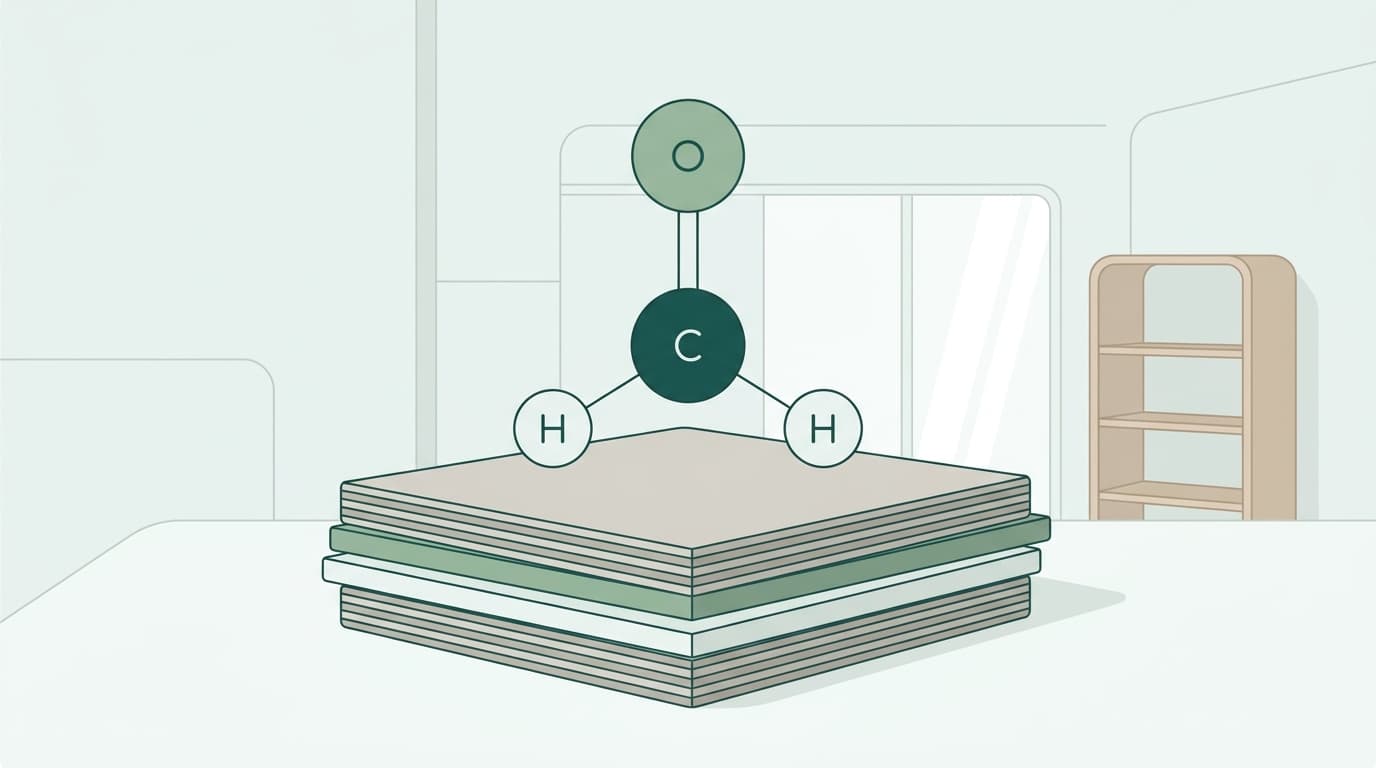
Formaldehyde (CH₂O) is a colourless gas used in the adhesive resins that bind plywood, MDF and particleboard — the boards nearly all Singapore renovation carpentry is built from. It is known as 甲醛 (jiǎquán) in Chinese, which is how much of the local discussion refers to it. At room temperature it releases slowly from these materials into indoor air — a process called off-gassing — and the IARC classifies it as a Group 1 carcinogen at chronic high exposures. For homes, the practical benchmark is the WHO and SS 554 guideline of 0.1 mg/m³ (0.08 ppm).
Where it comes from in a renovated home
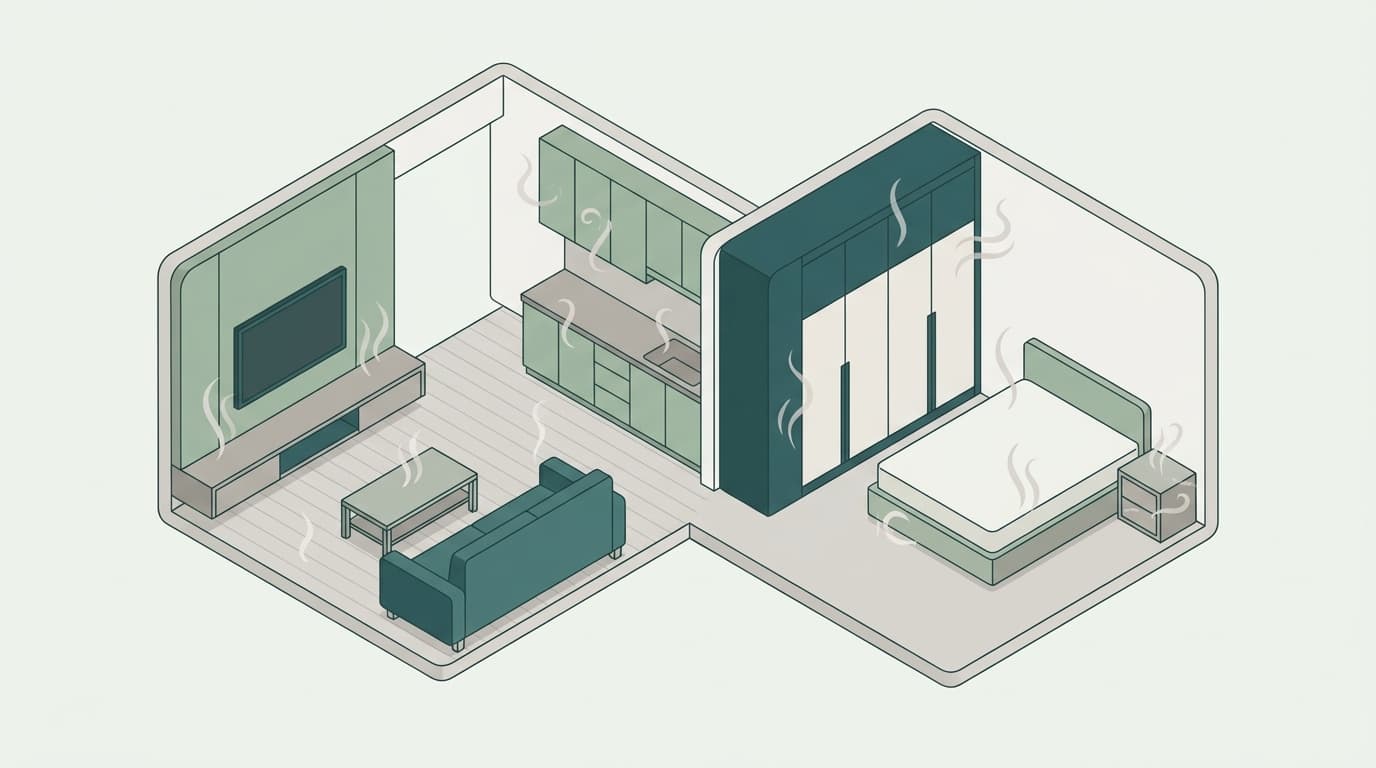
The overwhelming source is urea-formaldehyde resin — the low-cost adhesive inside composite wood. Every full-height wardrobe, TV feature wall, kitchen cabinet and laminate floor contains kilograms of it. Singapore's heat and humidity continuously hydrolyse the resin, releasing formaldehyde for years, not weeks. Smaller contributors: new furniture — especially flat-packed and imported pieces from Taobao and similar marketplaces, which are a recurring source of complaints in Singapore forums (IKEA and other major retailers certify to stricter E1/E0 emission classes, though "low" is not "zero") — plus mattresses, curtains and some paints, though NEA has banned formaldehyde-added interior paints since January 2026. If a single new wardrobe or bed smells sharp weeks after delivery, that item is the likely culprit, and a formaldehyde spot test can confirm it.
What exposure feels like
People often search "formaldehyde poisoning", but at household levels the accurate picture is irritation, not poisoning: stinging or watery eyes, scratchy throat, blocked or runny nose, headaches, and worsened asthma symptoms — typically easing when you leave the house and returning when you're back. Acute poisoning involves industrial accidents, not renovated flats. Two traps worth knowing: the smell is a poor guide (many people stop noticing it within days while levels remain elevated, and formaldehyde is faint at guideline-relevant concentrations), and symptoms overlap with common allergies — which is why measuring beats guessing. For the symptom list in full, the pattern that separates it from allergy or haze, and what the cancer classification means, see formaldehyde symptoms.
Does it go away on its own?
Eventually — but "eventually" is the problem. Most renovation VOCs clear in weeks; formaldehyde generation continues inside the boards for 3 to 15 years, fastest in the first year. Ventilation genuinely helps while windows are open, but levels rebound whenever a home is closed up with the aircon running — which in Singapore is most of the time. That is why source treatment, which decomposes formaldehyde where it is generated, is the reliable fix for an elevated reading rather than waiting it out.
What to do with this information
- Just renovated, obvious smell: levels are very likely elevated — treatment before move-in is the standard play (see formaldehyde removal prices).
- Unsure: a S$100 testing visit gives room-by-room numbers, waived if you go ahead with removal.
- Expecting a baby: read what the evidence says — calm, specific precautions beat panic.
Want to know your home's number?
Fixed treatment prices are on the price list, or book a visit in under a minute.