

Guide · Updated September 2026
Do air purifiers remove formaldehyde?
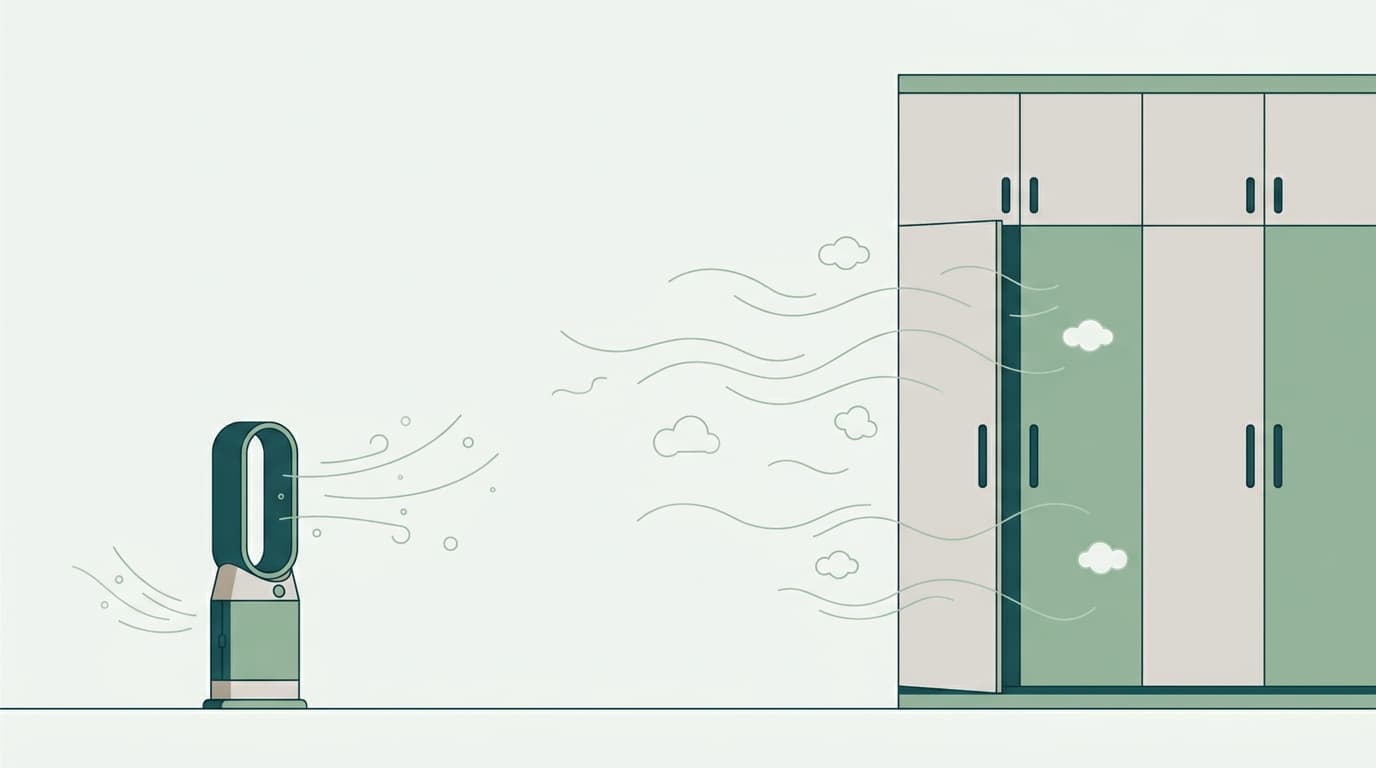
A purifier with enough activated carbon genuinely reduces airborne formaldehyde — in the room it runs in, while it runs. What it cannot do is fix the source: the urea-formaldehyde resin inside your carpentry keeps producing formaldehyde around the clock, so levels rebound when the purifier is off, and a single unit cannot bring a whole renovated home below the WHO guideline of 0.1 mg/m³ on its own. A purifier manages the symptom. That's worth having — as long as you know that's what you bought.
How purifiers capture formaldehyde (and how they don't)
The HEPA filter that headlines most purifier marketing does nothing for formaldehyde — HEPA traps particles, and formaldehyde is a gas. The component that matters is activated carbon, which adsorbs gas molecules onto its surface as air passes through. Two practical consequences follow:
- Carbon mass matters. A purifier with a few hundred grams of carbon in a thick dedicated filter holds far more than one with a thin carbon-coated mesh — the coated kind can saturate in weeks in a freshly renovated room.
- Saturation is silent. Carbon has no indicator. A full filter simply stops adsorbing — and under some conditions can re-release what it holds — while the purifier hums along looking exactly as effective as day one. The only way to know is to measure the room.
What about Dyson's "destroys formaldehyde" claim?
Dyson's formaldehyde models add a catalytic filter that oxidises formaldehyde into trace water and CO₂ rather than storing it — the same family of chemistry professional treatments use. It's a real mechanism and a genuine improvement over carbon-only designs, because the catalyst doesn't saturate the way carbon does. The limits are physical, not marketing: it treats only the air that passes through the machine, at one room's airflow rate, while your carpentry emits into every room simultaneously. It cleans air; it cannot reach the resin in the boards. As single-room management, credible. As a whole-home fix after a renovation, it isn't designed to be one.
When a purifier is the right call
- Managing one room — a bedroom with one new wardrobe, where you run it nightly with the door closed.
- After source treatment — as ongoing maintenance, where it only has residual low-level emissions to deal with. This is where purifiers genuinely shine.
- You want one anyway — for allergies, haze season or dust. The formaldehyde reduction comes free with a purchase that already makes sense.
When it isn't
A just-renovated home has kilograms of emitting resin spread across every built-in in every room. Against that, one purifier moving a few hundred cubic metres of air an hour is arithmetic that doesn't close — especially with a move-in deadline, and especially for a nursery, where the goal is verified-safe air rather than somewhat-better air. Running a purifier 24/7 in every room gets expensive too: S$300–1,500 per capable unit plus replacement filters indefinitely, versus a one-time professional formaldehyde removal from S$280 with before/after readings against the guideline — see the formaldehyde removal price list.
The sensible sequence
If you already own a purifier, keep running it — it helps at the margin and costs nothing more. But decide the big question with numbers, not vibes: in Singapore, Formaldehyde.SG's S$100 testing visit tells you whether your rooms are above the guideline (purifier or not), and safe formaldehyde levels explains what the readings mean. Treat if elevated; let the purifier handle maintenance after.
Purifier running but the smell persists?
That's the source outpacing the filter. Get room-by-room numbers with a S$100 testing visit or see fixed treatment prices.