
Clear the air after your renovation.
Formaldehyde removal for Singapore homes and offices. We measure every room before and after, and come back a week later to check the levels again.
Island-wide, 7 days a week. We reply on WhatsApp within 15 minutes.
0.24mg/m³
Above the WHO guidelinedown from 0.24 before treatment
 Featured on CNAOur team, treating a Hougang flat
 By LAF EnvironmentalIndoor air specialists since 2016
- SGSSGS-certified solutionTested for efficacy and human safety
- 1yr1-year service warrantyPlus a re-check visit a week later
What does formaldehyde removal in Singapore involve?
Formaldehyde removal treats the source — the urea-formaldehyde resins in plywood, MDF and built-in carpentry — with decomposition agents, rather than waiting years for off-gassing to finish naturally. A professional treatment in Singapore costs S$280–800 by flat type or floor area (landed and larger homes are quoted), takes 2–4 hours, and should always include before/after meter readings benchmarked against the WHO guideline of 0.1 mg/m³.
- Cost
- S$280–800
- On site
- 2–4 hrs
- Air out
- 12–24 hrs
- Target
- ≤ 0.10 mg/m³
Formaldehyde, explained in two minutes
What VOCs are, why formaldehyde outlasts the renovation smell, what it does to your health, and exactly what happens when we treat your home.
Prices
Published in full. The price for your home type is the price you pay, with readings and the written report included.
Year-end promotion: save up to S$600
Prices below apply to bookings until 31 Dec 2026
HDB / BTO flats
One fixed price per flat type
- 2-roomSave S$80
S$360S$280- 3-roomSave S$200
S$500S$300- 4-roomSave S$270
S$620S$350- 5-roomSave S$320
S$770S$450- Executive apartment / maisonetteSave S$380
S$880S$500
Condominiums & ECs
By floor area; exact price confirmed before you book
- Up to 500 sqftSave up to S$100
S$300–500S$300–400- 501–800 sqftSave up to S$200
S$500–700S$400–500- 801–1,200 sqftSave up to S$300
S$700–900S$500–600- 1,201–1,500 sqftSave up to S$500
S$1,000–1,200S$600–700- 1,501–2,000 sqftSave up to S$600
S$1,200–1,400S$700–800
Landed homes, penthouses and anything over 2,000 sqft are quoted on WhatsApp. No GST is added, and nothing is added on the day. Promotion prices apply to bookings until 31 Dec 2026.
Every treatment includes
- Initial formaldehyde reading in every room, before any treatment
- Protection sheets over appliances and anything not being treated
- Two cycles of SGS-certified catalytic solution on carpentry, custom furniture and painted walls, with drawers removed and treated
- Final readings on the day, with a written report benchmarked against the WHO 0.1 mg/m³ guideline
- Return visit one week later to re-check the levels
- 1-year service warranty
Not sure you need treatment? A testing-only visit is S$100: room-by-room readings and a written report. Waived if you go ahead with formaldehyde removal. How testing works
Book in under a minute
Five fields, then everything continues on WhatsApp — your fixed price is confirmed before you commit to anything. We reply on WhatsApp within 15 minutes during opening hours.
Prefer to just chat? Message us directly — no form needed.
How a treatment visit works
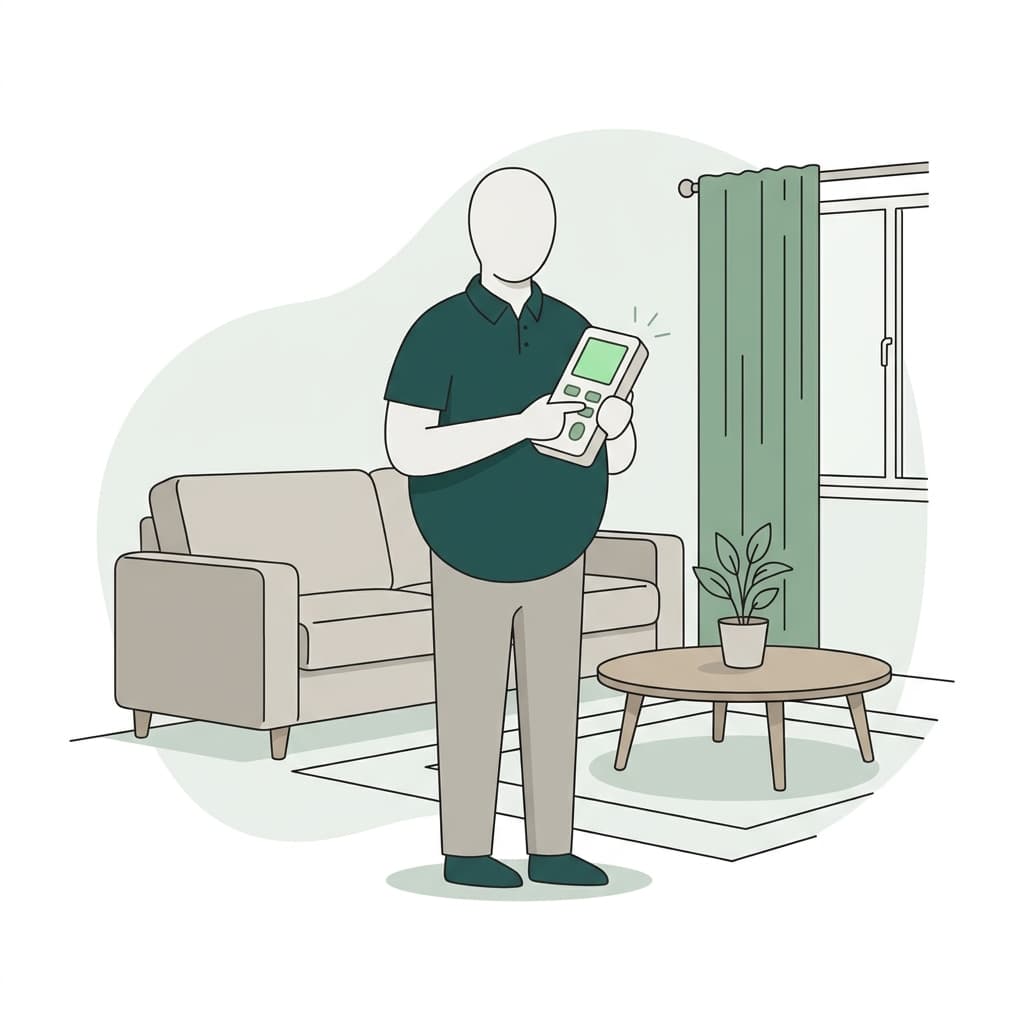 1
1Baseline readings
We measure formaldehyde in every room with a calibrated professional meter before touching anything, then cover appliances and anything not being treated with protection sheets.
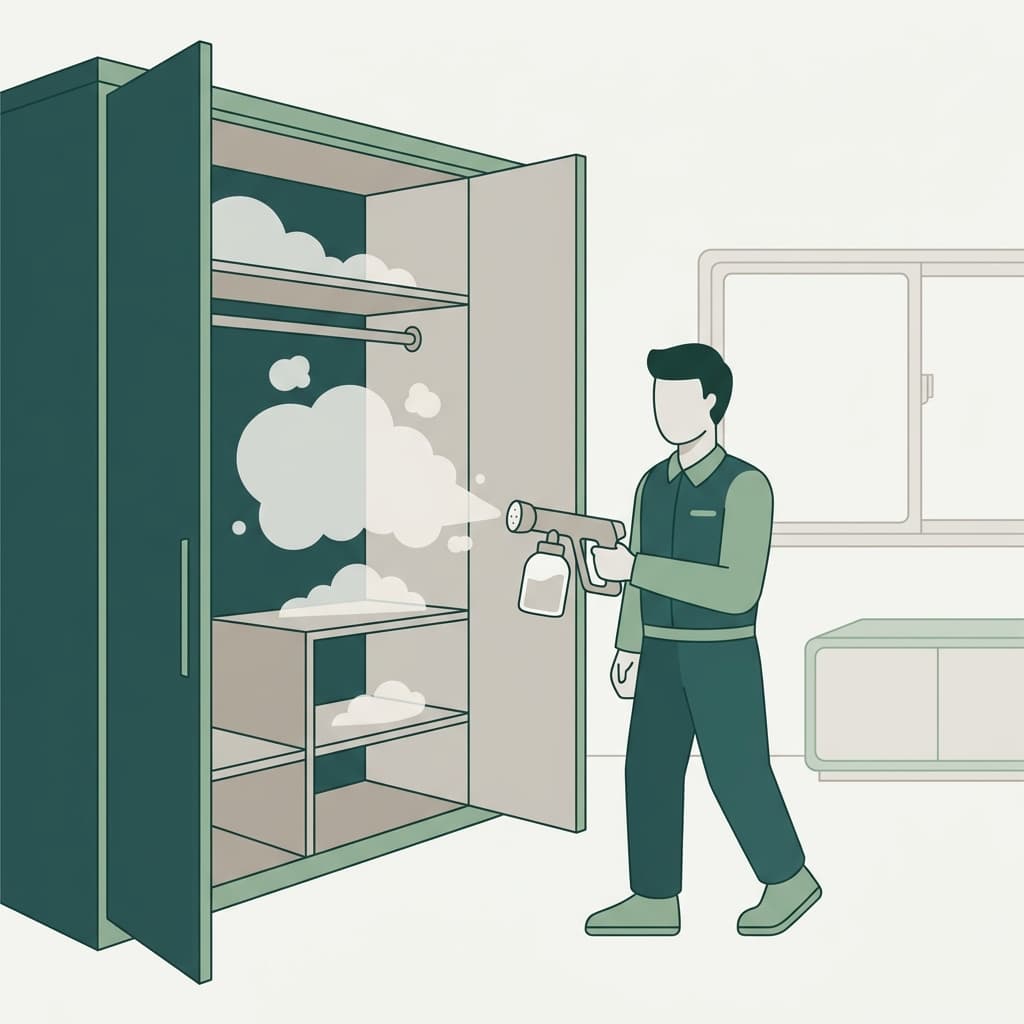 2
2Source treatment
Two cycles of a catalytic solution, tested and certified by SGS Singapore for efficacy and human safety, sprayed over carpentry, built-in and custom furniture and painted walls. Drawers come out so their insides are treated too.
 3
3Final readings
Every room is measured again before we leave, and you get a written report benchmarked against the WHO 0.1 mg/m³ guideline.
 4
4One-week check
You keep the written report. A week later we come back to re-check the levels, and every treatment carries a 1-year service warranty.
What you get at the end
A written report with every room's reading before and after treatment, benchmarked against the WHO 0.1 mg/m³ guideline, handed over on the day and yours to keep.
Treatment report
4-room HDB · 2–4 hrs
Room
Before
After
Living room
0.19mg/m³
0.05mg/m³
Master bedroom
0.24mg/m³
0.06mg/m³
Kids’ room
0.21mg/m³
0.05mg/m³
Kitchen
0.14mg/m³
0.04mg/m³
WHO & SS 554 guideline: 0.10 mg/m³ (0.08 ppm) — final readings on the day, re-checked a week later.
Illustrative readings. Your report shows your home’s actual before/after numbers, taken on site.
Who books us
Just-renovated homes
New carpentry, fresh paint and that unmistakable smell — the most common booking, ideally before you move in.
Families with babies on the way
Infants and pregnant women are the groups health agencies advise to keep exposure lowest for.
New furniture, older homes
A single wardrobe, bed frame or mattress can push a bedroom above the guideline for months.
Offices and childcare centres
Commercial fit-outs off-gas the same way homes do — we treat and certify by floor area.
What formaldehyde does to your health
At the levels a renovated Singapore home reaches, formaldehyde causes irritation, not poisoning. The symptoms look like a mild allergy, get blamed on haze or the aircon, and quietly persist for months because nobody connects them to the new wardrobes.

The telltale pattern: symptoms ease when you're away, at work or on holiday, and come back within hours of getting home. They're often worst after a night in a closed, air-conditioned bedroom.
- Eyes
- Stinging, watering, grittiness — often the first and most reliable sign.
- Nose & throat
- Dryness, scratchiness, a blocked or runny nose, constant throat-clearing.
- Head
- Dull headaches, poor concentration, unusual tiredness in the evening at home.
- Airways
- Coughing, chest tightness, and noticeably worse control of existing asthma.
- Skin
- Dryness or flare-ups of existing eczema in some people.
- Sleep
- Waking with a dry throat or blocked nose in a closed bedroom with new built-ins.
Why it outlasts the renovation smell
Most renovation smells (paint, adhesives, sealants) are volatile organic compounds that fade within weeks. Formaldehyde is bound inside the urea-formaldehyde resins that hold plywood, MDF and particleboard together, and it keeps releasing as those resins break down: studies measure meaningful off-gassing for 3 to 15 years, faster in Singapore's heat and humidity.
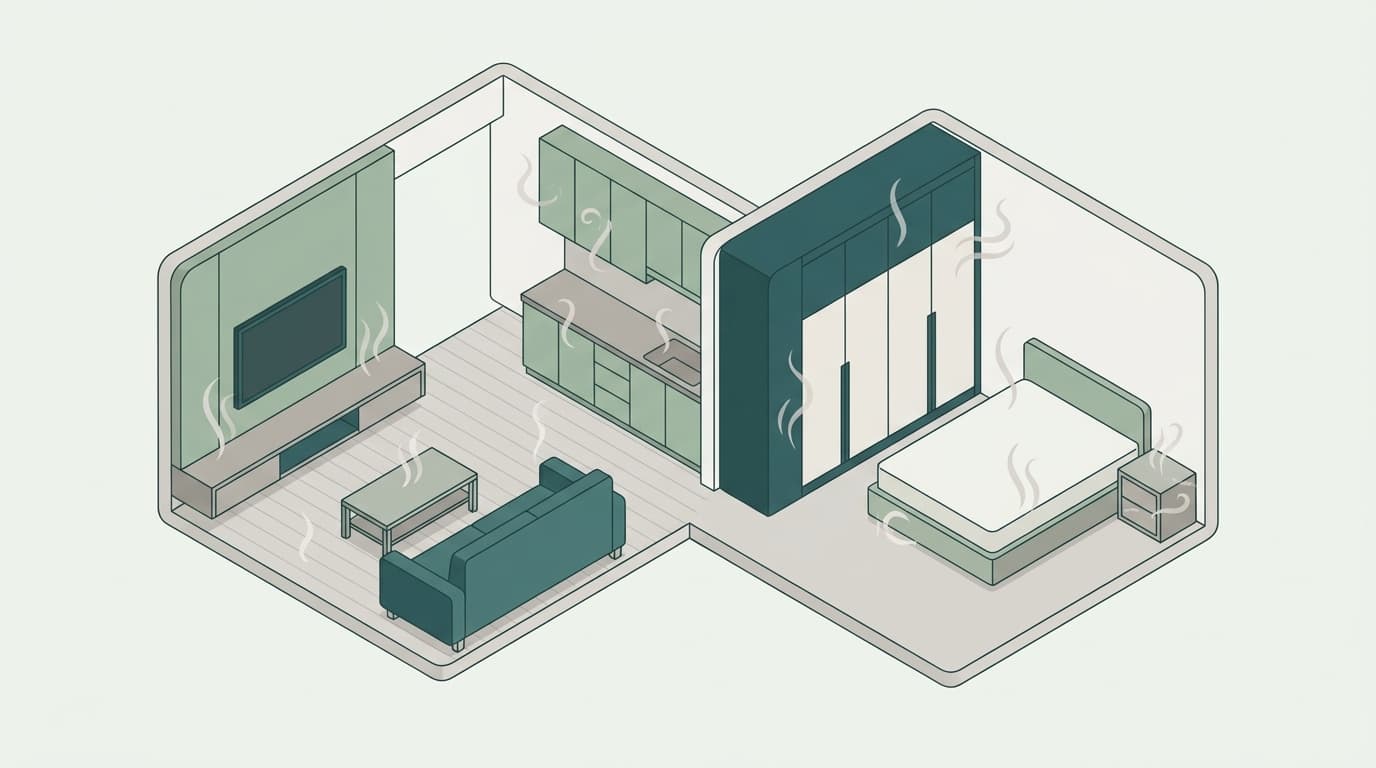
The long-term risk
The International Agency for Research on Cancer classifies formaldehyde as a Group 1 carcinogen, its highest hazard category, linked mainly to nasopharyngeal cancer and myeloid leukaemia. That evidence comes largely from workers exposed for years at levels above what a home reaches, so a new wardrobe is not a cancer diagnosis. But years of off-gassing is exactly why readings above the WHO and SS 554 guideline of 0.1 mg/m³ (0.08 ppm) are worth fixing rather than waiting out.
Children breathe more air per kilogram of body weight, people with asthma react at lower levels, and pregnancy is when families most want certainty. See formaldehyde, babies and pregnancy.
What happens at what level
Below 0.1 mg/m³< 0.08 ppm
No irritation expected. The WHO / SS 554 line, and our after-treatment target.
0.1–0.5 mg/m³0.08–0.4 ppm
Children, asthmatics and sensitive adults report eye and throat irritation. Many renovated homes sit here.
0.5–1.2 mg/m³0.4–1 ppm
Irritation becomes common; most people notice an odour. Seen in heavily fitted new flats.
Above 1.2 mg/m³> 1 ppm
Clear eye watering and throat irritation for most people. Uncommon, but measured in small sealed rooms.
You can't smell your way to safety: odour thresholds vary so widely that many people notice nothing above the guideline. Only a meter tells you. Formaldehyde symptoms in full →
Measured on the day. Checked again a week later.
Every job starts and ends with room-by-room readings taken in front of you, benchmarked against the WHO guideline of 0.10 mg/m³ — no fine print about "odour" or "satisfaction", just the number on the meter. A week later we come back to re-check the levels, and every treatment carries a 1-year service warranty.
≤ 0.10 mg/m³
= 0.08 ppm (SS 554 / NEA)
As seen on CNA, July 2024
CNA followed our team into a Hougang flat where “the kids kept falling sick”
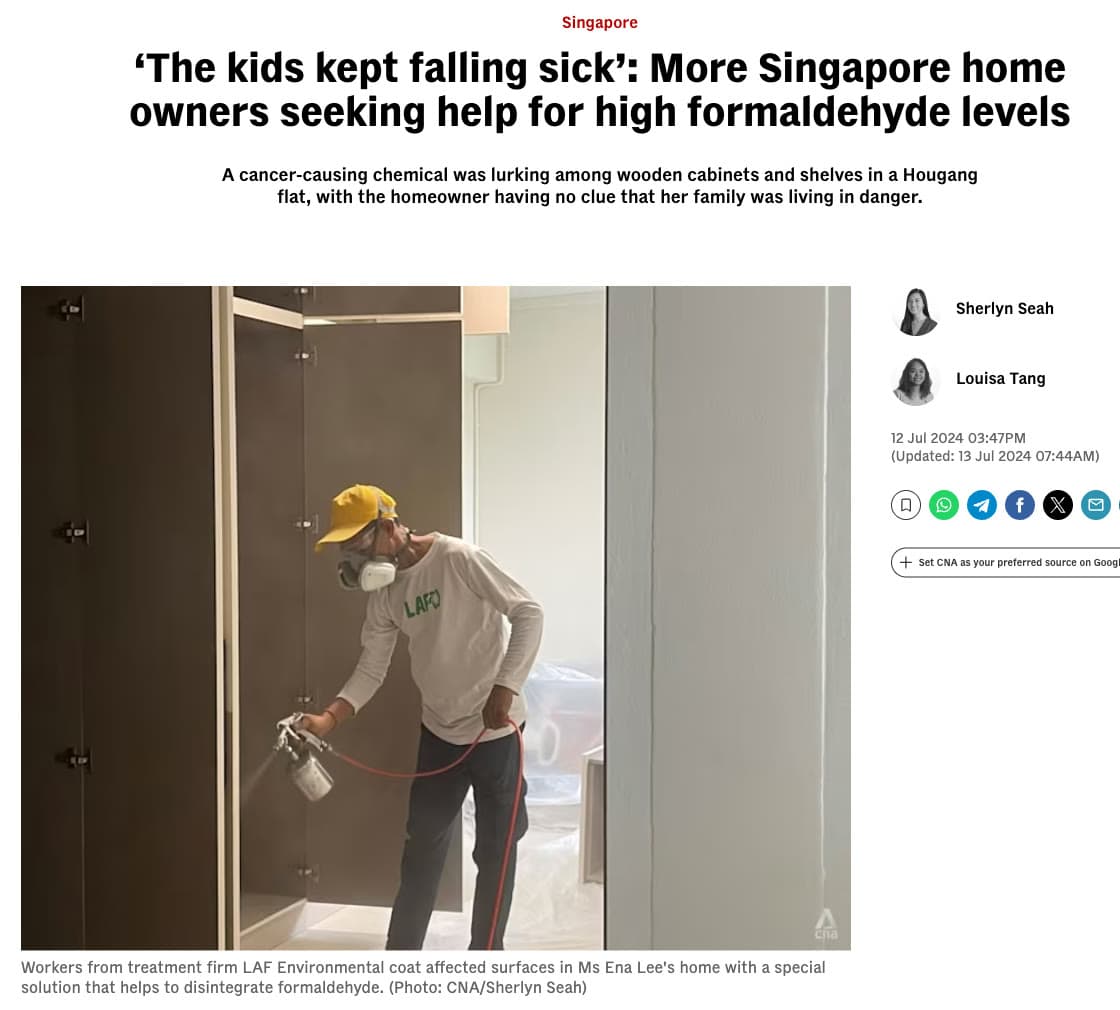
“Another firm LAF Environmental, which treated Ms Lee’s flat, also saw about 30 per cent more cases and handles more than 20 cases a month now.”
CNA, 12 July 2024. Read the story →
Formaldehyde.SG is by LAF — the treatment firm CNA calls LAF Environmental. Same technicians, same treatment, now with published prices and before/after readings in every room.
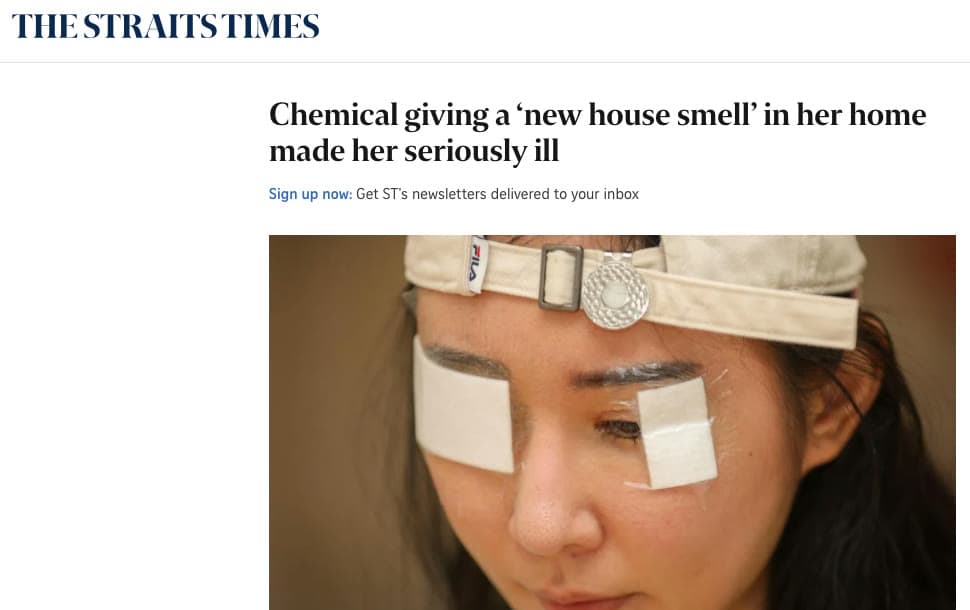
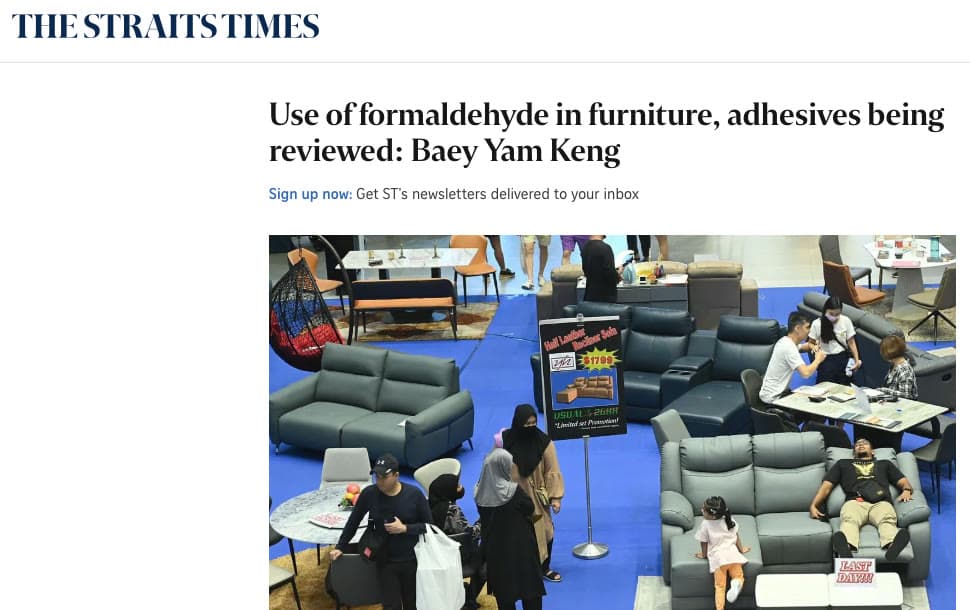
Why formaldehyde became a national story in 2024
Coverage of the problem itself — these two stories don't feature us.
Common questions, straight answers
How much does formaldehyde removal cost in Singapore?
Published prices (year-end promotion until 31 Dec 2026): HDB flats from S$280 (2-room) to S$500 (executive apartment / maisonette), with a 4-room at S$350 (usually S$620); condominiums and ECs S$300–800 by floor area up to 2,000 sqft, exact price confirmed before booking; no GST added; landed homes, penthouses and larger units are quoted per job. Every job includes before/after meter readings, a written report, a re-check visit a week later and a 1-year service warranty. A testing-only visit is S$100, waived if you go ahead with removal.
Is the formaldehyde smell after renovation dangerous?
Formaldehyde is classified as a Group 1 carcinogen by the IARC, and short-term exposure above the WHO guideline of 0.1 mg/m³ irritates the eyes, nose and throat. The smell itself is not a reliable gauge — some people stop noticing it within days while levels remain elevated. The only way to know your home is safe is to measure it.
How long does formaldehyde off-gassing last?
Unlike most renovation VOCs, which dissipate in weeks, formaldehyde is released slowly from the urea-formaldehyde resins inside plywood, MDF and particleboard — studies measure meaningful off-gassing for 3 to 15 years. Singapore’s heat and humidity accelerate the release, which raises indoor levels rather than clearing them.
Does formaldehyde removal treatment actually work?
Yes — professional treatment applies a catalytic solution directly to carpentry, built-in furniture and painted walls, breaking formaldehyde down at its source rather than masking it. Ours is tested and certified by SGS Singapore for efficacy and human safety, applied in two cycles. Every job is verified with final readings in each room before we leave, and a return visit a week later to re-check the levels.
What if formaldehyde levels go back up after treatment?
We come back one week after every treatment to re-check the levels, so you are not left guessing. Off-gassing continues at a much-reduced rate after treatment, and every job carries a 1-year service warranty.
How long does treatment take, and when can we move in?
A typical 4-room HDB takes 2–4 hours to treat. We recommend ventilating for 12–24 hours after treatment before moving back in. Final readings are taken before we leave, so you have your report in hand, and we come back a week later to re-check the levels.
Do I need removal, or just testing?
If your renovation finished recently and there is a noticeable smell, levels are very likely elevated and most owners book treatment directly. If you are unsure — an older renovation, new furniture only, or no obvious smell — a S$100 testing visit gives you room-by-room readings first, and the fee is waived if you go ahead with removal.
Is treatment safe for babies, pregnant women and pets?
The treatment agents we use are water-based and neutral once cured. We ask that the home be vacated during treatment and ventilated for 12–24 hours afterwards, after which it is safe for infants, pregnant women and pets. Families with newborns are one of the most common reasons owners book us.
Which areas of Singapore do you cover?
We cover all of Singapore — HDB, condominium, landed and commercial units island-wide, seven days a week.
Read before you book
All guides →No scare tactics — just the evidence, so you can decide whether treatment makes sense for your home.
Does Your Aircon Remove Formaldehyde? (Short Answer: No)
Air conditioning recirculates air rather than replacing it, so it removes almost no formaldehyde — and a dirty cooling coil can hold VOCs and release them when you switch on. What actually works, in order.
What Is Formaldehyde? (甲醛, Explained for Singapore Homes)
What formaldehyde actually is, where it comes from in a renovated home, what exposure does at different levels, and the symptoms people mistake for something else.
How to Remove Formaldehyde: What Works and What Doesn’t
Every formaldehyde removal method honestly ranked — ventilation, bake-out, purifiers, plants, DIY sprays and professional source treatment — with verdicts you can act on.
New Furniture Formaldehyde: Taobao, IKEA and What to Check
Why new wardrobes, bed frames and mattresses off-gas formaldehyde, what E0/E1 emission classes actually mean, and how imported flat-pack furniture compares.
Low-Formaldehyde Plywood & Carpentry Boards: How to Spec Them
Built-in carpentry is the largest source of formaldehyde in most Singapore homes. What E0, ENF, CARB and F★★★★ actually cap, what the upgrade costs, and how to write it into your renovation quote.
Formaldehyde Removal Sprays: Do They Actually Work?
What is inside consumer formaldehyde sprays, why the chemistry is real but the coverage is not, and the narrow cases where a DIY bottle is genuinely the right call.
Do Air Purifiers Remove Formaldehyde? An Honest Answer
What activated carbon and Dyson’s formaldehyde-destroying filters actually do, where purifiers genuinely help, and why they can’t fix the source.
Formaldehyde Detectors, Meters and Test Kits: Which Can You Trust?
Cheap handheld formaldehyde meters vs electrochemical sensors vs lab-grade testing — what each actually measures and when the numbers can be trusted.
Formaldehyde Symptoms: What Exposure Actually Feels Like
The symptoms formaldehyde causes at home renovation levels, the pattern that separates it from allergies or haze, why smell is a poor warning signal, and what the cancer classification does and does not mean.
Formaldehyde Removal Cost in Singapore (2026)
What formaldehyde removal actually costs in Singapore — fixed tiers by home size, what drives the price, and how testing-only visits compare.
Safe Formaldehyde Levels & How Testing Works
The WHO 0.1 mg/m³ guideline, Singapore’s SS 554 standard, what readings mean, and why cheap handheld meters mislead.
New Renovation Smell: What Off-Gasses and For How Long
That “new reno” smell is a mix of VOCs and formaldehyde. What each component is, how long it lingers, and what actually shortens the timeline.
Formaldehyde, Babies and Pregnancy: What the Evidence Says
A calm, evidence-based look at formaldehyde exposure risks for infants and during pregnancy — what studies show, and sensible precautions after a renovation.
VOC vs Formaldehyde: What’s the Difference?
Formaldehyde is one VOC among many — but it behaves differently. Why it outlasts the rest, and what that means for treatment.
Breathe easier this week
Tell us your home type on WhatsApp and get a confirmed slot — usually within the same week.
We reply on WhatsApp within 15 minutes during opening hours.