

Guide · Updated September 2026
New furniture formaldehyde: Taobao, IKEA and what to check
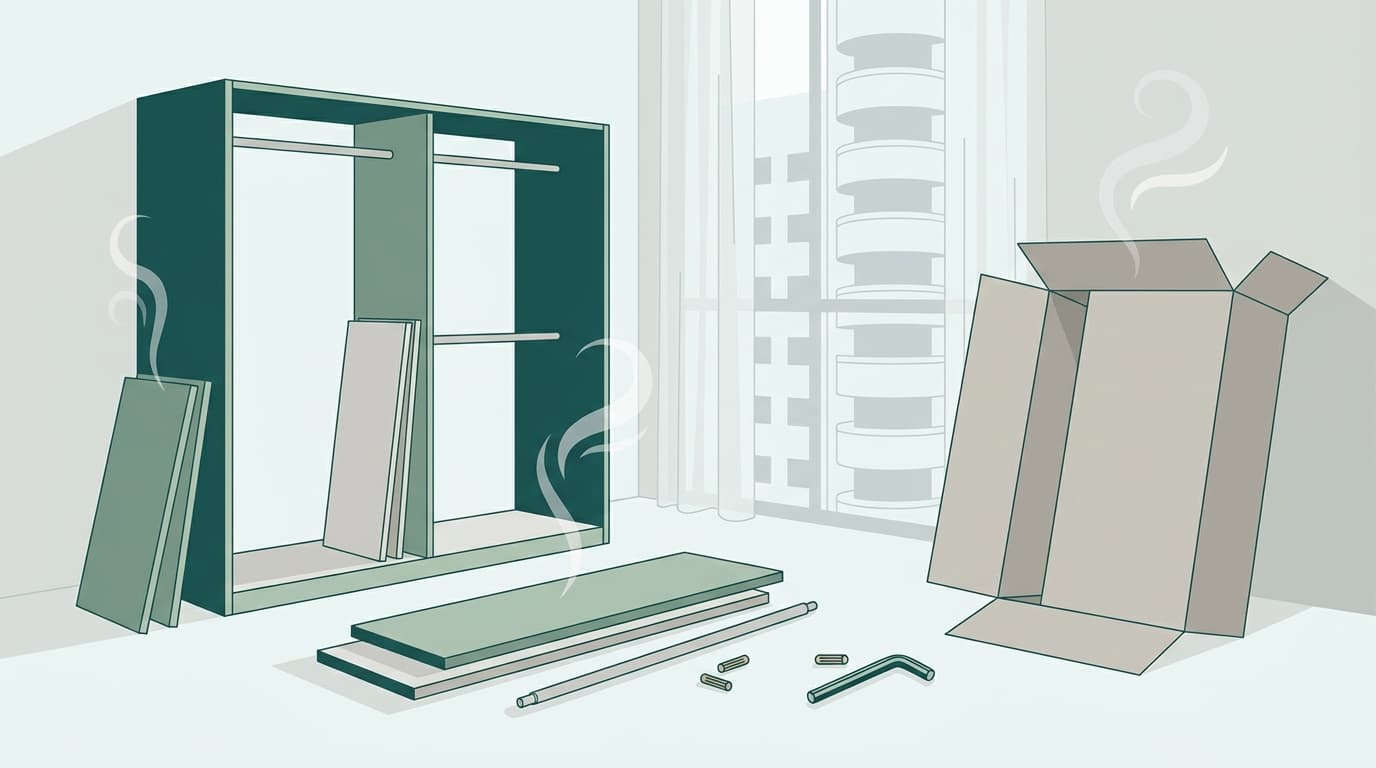
Nearly all composite-wood furniture — wardrobes, bed frames, TV consoles, shelving — contains urea-formaldehyde resin, so the real question is not whether a new piece has formaldehyde but how fast it releases it. That emission rate is what certification classes like E1 and E0 measure, and it is the whole difference between a wardrobe you never notice and one that makes a bedroom smell sharp for months.
Does new furniture contain formaldehyde?
Almost always, yes — if it is made from particleboard, MDF or plywood (which is to say, almost everything that isn't solid wood or metal). The urea-formaldehyde adhesive that binds these boards is cheap and strong, and it releases formaldehyde gas as it slowly breaks down. Solid wood, metal and glass furniture carry only trace amounts from finishes. See what formaldehyde is for the fuller picture.
E0, E1, E2: what the emission classes mean
- E1 — the standard European limit, and the minimum most reputable retailers certify to. Low emission under test conditions.
- E0 / CARB Phase 2 / TSCA Title VI — stricter classes with roughly half the E1 limit or less. Common in premium and children's furniture.
- E2 — a looser class no longer accepted for indoor furniture in most developed markets, but still produced for markets without enforcement.
The honest caveat: "low emission" is not "zero". Emission classes are measured per board under lab conditions — a bedroom lined with E1 wardrobes, bed frame and floor can still sum above the WHO/SS 554 guideline of 0.1 mg/m³, especially closed up with the aircon running. Class tells you the per-item risk; only a reading tells you the room.
These classes matter even more for built-in carpentry, which covers far more board area than loose furniture and cannot be returned — how to spec low-formaldehyde plywood covers writing the grade into your renovation quote.
The Taobao question
Imported flat-pack furniture from Taobao and similar marketplaces is a recurring theme in Singapore renovation forums, usually in the form of "my new wardrobe still smells sharp three weeks later". The fair framing: the issue is not where the furniture is made — plenty of certified E0/E1 furniture comes from the same factories — but that marketplace listings often carry no verifiable emission certification, and aggressive price competition favours cheaper, higher-emitting resin. You are not buying a bad product so much as buying an unknown one.
What to check before you order:
- Ask the seller for an E1 / CARB / GB 18580 test certificate — sellers with real certification usually show it readily.
- Smell-check on delivery, before assembly — a sharp, eye-stinging odour (not just "new smell") is a red flag worth a return.
- Confirm the return window covers the assembly period.
- For nursery furniture, favour certified E0/solid wood regardless of source — see formaldehyde and babies.
Does IKEA use formaldehyde in their furniture?
Yes, in the same composite boards as everyone else — but IKEA certifies to at least E1 and in recent years to stricter limits (their stated requirements sit around half the E1 level), with supplier auditing behind it. An IKEA wardrobe is not formaldehyde-free, but it is a known, low quantity — which is exactly what an uncertified listing is not.
How long does formaldehyde stay in new furniture?
Off-gassing is strongest in the first weeks to months and then declines — but the resin keeps releasing at a lower rate for years, and Singapore's heat and humidity accelerate it. Placement matters as much as timeline: a large wardrobe a metre from your pillow in a closed aircon bedroom delivers far more exposure than a coffee table in a ventilated living room. The off-gassing timeline guide covers this in detail.
How to get formaldehyde out of new furniture
- Ventilate the item, not just the room — doors and drawers open, fan blowing through it, for the first several weeks. Most of what works is airflow.
- Don't seal it in — a new wardrobe in a closed aircon bedroom is the worst configuration; levels build overnight while you sleep next to it.
- Measure if in doubt — a S$100 formaldehyde testing visit reads the room and inside the wardrobe itself, and the fee is waived if you go ahead with treatment.
- Treat the source when readings are elevated — a formaldehyde removal service works on furniture interiors the same way it works on built-in carpentry.
Should I worry about formaldehyde in furniture?
Calibrate, don't panic. One new certified piece in a ventilated room, no symptoms — carry on; the smell will fade. Multiple new pieces in a closed aircon bedroom, a sharp smell that persists past a few weeks, irritated eyes or throat that ease when you leave the house, or a nursery involved — measure. Numbers beat worry in both directions: when a test comes back fine, we say so.
Suspicious of one new piece?
A S$100 testing visit reads the room and the furniture itself — or book a treatment slot if the smell has already made the decision for you.